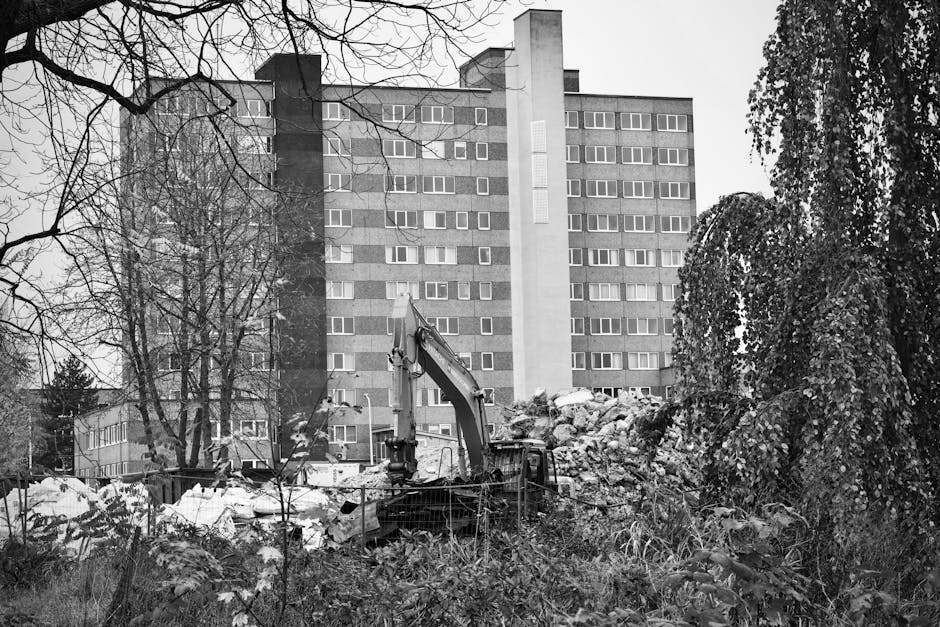
Upminster Bridge Estate Rubbish Clearance for Tight Access: A Practical Guide
When rubbish needs clearing from an estate but the access is awkward, narrow, or frankly a bit of a faff, the job quickly becomes less about "just loading a van" and more about planning. That is exactly why Upminster Bridge estate rubbish clearance for tight access needs a different approach from a standard collection. Whether you are dealing with a cramped courtyard, a long internal corridor, shared entry doors, or limited parking near the block, the right method saves time, avoids damage, and keeps everyone safer.
In this guide, we'll look at how estate clearance works in tight spaces, what makes it tricky, who it helps, and how to prepare so the process runs smoothly. We'll also cover practical mistakes to avoid, useful decision points, and a simple checklist you can use before booking. If you're trying to clear bulky items, general household waste, or mixed rubbish without making a mess of the building, you're in the right place.
Why Upminster Bridge estate rubbish clearance for tight access Matters
Tight access changes everything. A straightforward rubbish removal job might involve pulling a vehicle up to the front, loading from a driveway, and leaving in under an hour. On an estate, though, the picture is different. You may have stairwells, lift restrictions, shared entrances, parked cars blocking the route, narrow communal paths, or a bin store that always seems two sizes too small. The last thing you want is waste scattered around the wrong corner or a heavy item dragged against a painted wall.
In practical terms, tight access clearance matters because it reduces disruption. Residents still need to get in and out. Neighbours don't want corridors blocked. Management teams want the place kept clean, and quite reasonably so. If clearance is badly planned, you end up with extra handling, more noise, more trips, and a longer job than necessary. To be fair, it is usually the access, not the rubbish itself, that causes the headache.
For estate settings around Upminster Bridge, that can mean planning around loading space, lift timing, permission for temporary parking, and the safest route from flat to vehicle. If the waste includes bulky items like wardrobes, sofas, fridges, or mixed builder's waste, the route matters even more. A good clearance team thinks about the building first and the waste second. That's the right order.
Expert summary: tight-access estate clearance is mostly about preparation, lifting discipline, and minimising disturbance. If those three things are handled well, the job usually feels calm and efficient rather than chaotic. And yes, calm rubbish removal is a thing. A lovely thing, actually.
How Upminster Bridge estate rubbish clearance for tight access Works
The process is simpler than many people expect, but it only works well when the access constraints are understood early. In most cases, the workflow starts with a quick assessment of what needs removing, where it is located, and how it can be moved safely. That can be a phone description, photos, or an in-person visit depending on the size and complexity of the job.
Once the route is known, the team can choose the right vehicle size, loading method, and number of operatives. On an estate, you may not want the biggest vehicle possible if parking is limited or there is a narrow entrance road. Sometimes a smaller, more agile vehicle is the smarter choice. That's one of those details people only learn after a few awkward attempts. No one loves the sound of a van scraping a kerb at 8am.
The team will usually arrive with the tools needed to move items safely: gloves, sack trucks, trolleys, straps, and protective materials for lifting. If items must come through communal areas, care is taken to avoid wall scuffs and floor damage. Waste is then sorted into reusable, recyclable, and disposable streams where possible. For mixed waste, the team may separate items during loading or once they return to their disposal point.
For many customers, a useful next step is to compare clearance with other waste solutions. If you are unsure whether you need a full clearance visit or a broader service, the site's waste removal service and home clearance options can help you judge what fits the job best. If the job includes more delicate items, the pages for furniture clearance and mattress and sofa disposal are also useful references.
Key Benefits and Practical Advantages
There are a few clear reasons people choose professional estate rubbish clearance when access is awkward. The first is obvious: it saves effort. Moving a washing machine down two flights of stairs or shifting bags through a narrow hallway is hard work, and it is not the kind of job you want to guess your way through.
The second is protection. Estates often have shared finishes, and one careless turn with a bulky item can chip paint, mark the lift, or crack a corner trim. Careful clearance reduces that risk. The third is speed. A trained team can usually move far more efficiently than a do-it-yourself attempt, especially where awkward turns and short loading windows are involved.
There is also the less visible benefit of coordination. On busy estates, timing matters. Residents may be coming and going. A caretaker may need access. Management may have a preferred loading spot. A tidy, organised clearance helps keep everyone on side. That matters more than people think, especially in buildings where people notice everything.
- Less manual strain: fewer risky lifts and fewer trips up and down stairs.
- Better building care: reduced chance of damaging walls, doors, lifts, or flooring.
- Cleaner finish: waste is removed in one organised process, not scattered over several days.
- Improved efficiency: the route, vehicle, and crew size are matched to the access.
- More predictable results: especially useful when items are bulky, heavy, or oddly shaped.
If your clearance includes business-related waste from an estate office, communal workspace, or managed property, it can also make sense to review business waste removal and office clearance so you can separate domestic from commercial waste properly.
Who This Is For and When It Makes Sense
This kind of service is useful for a surprisingly wide range of people. Flat owners, tenants, landlords, estate managers, letting agents, caretakers, and tradespeople all run into tight-access rubbish at some point. The common thread is simple: the waste is not hard to identify, but getting it out is the problem.
It makes particular sense when you have bulky or mixed items and a building layout that makes self-removal awkward. Think old furniture in a top-floor flat, bags of clutter in a bin room at the back of an estate, or leftover renovation debris that cannot just be wheeled out in one go. If a lift is small, the staircase is narrow, or the car park is tight, that's the classic scenario.
You might also need this service after a tenancy changeover, a probate clear-out, a renovation project, or a family declutter. Sometimes the job is emotional as much as physical. Clearing a late relative's flat, for example, can feel oddly draining before you've even touched a bag. In those situations, a steady, respectful clearance approach matters. No rush, no mess, no drama.
It may also be a smart fit if you only have a narrow time slot for access, such as a managed building's delivery window. That is where planning saves the day. Well, not glamorous planning. But the kind that prevents a long awkward wait outside the gate with a sofa balanced on its end.
Step-by-Step Guidance
If you want the job to run well, a little preparation goes a long way. The following steps are the practical backbone of a smooth estate clearance in a tight-access setting.
- Identify exactly what needs removing. Separate general rubbish, bulky items, electricals, and anything potentially hazardous. A rough idea is fine, but a clear list is better.
- Check the access route. Measure narrow doors, turns, stair widths, and lift space if relevant. Even a quick look at the route can reveal the likely pinch points.
- Note parking and loading restrictions. If the vehicle cannot park close enough, the team needs to know in advance so the schedule and equipment can be planned properly.
- Flag any difficult items. Fridges, sofas, large wardrobes, and builder's rubble often need different handling. So do awkward items with sharp edges or fragile surfaces.
- Protect shared spaces. Move small valuables away from corridors, and if possible clear a temporary path through the flat or storage area.
- Confirm timing. Choose a slot that causes the least disruption to residents and building users. Early morning can be good in some cases; in others, it is just too hectic.
- Ask about sorting and disposal. If you want items recycled where possible, make that clear from the beginning.
Here's the plain-English version: the better the route and item list, the smoother the clearance. You do not need to over-engineer it. Just make the hidden obstacles visible before anyone starts lifting.
Expert Tips for Better Results
After enough estate clearances, a few habits make a big difference. First, never underestimate how much space a single bulky item takes when it reaches a doorway. A wardrobe that seems manageable in a bedroom can suddenly become awkward the moment it hits a narrow hall. So, think about turning space, not just item size.
Second, keep the route as clean as possible. Shoes, mats, loose bags, children's toys, plant pots, and random hallway clutter all become trip hazards very quickly. It sounds obvious, but in the real world these things are always there, somehow.
Third, take a moment to decide what should be handled separately. For example, white goods and appliances may need specific disposal handling, which is why it helps to review fridge and appliance removal before the day. Likewise, if you have any items that may be classed as hazardous, it is worth checking hazardous waste disposal guidance so nothing ends up mixed in by mistake.
Fourth, ask for clarity on what happens after collection. Many people only think about the removal itself, but the downstream process matters too. If recycling is important to you, the page on recycling and sustainability is a helpful reminder that not everything has to go straight to disposal. Good clearance work should try to keep useful material in the loop where possible.
Practical tip: if you are unsure whether an item is "bulky waste" or just standard rubbish, describe it by size, weight, and where it sits in the property. That usually gives a more useful answer than the item name alone.
And one more thing. If you can take photos of the access route, do it. Not because anyone expects perfection, but because photos often reveal a hidden stair bend, a low ceiling edge, or a tight bin-store gate that words miss.
Common Mistakes to Avoid
Most problems with tight-access clearance come from underestimating the route. People often focus on the pile of rubbish and forget the journey from room to vehicle. That is where delays usually begin.
- Not measuring doorways and turns: a few centimetres can be the difference between smooth handling and a stuck item.
- Leaving everything until the day of collection: if the access path is cluttered, the crew loses time before the work even begins.
- Mixing waste types without warning: especially if you have electricals, appliances, or potentially hazardous items.
- Ignoring parking constraints: a van that cannot get near the entrance can turn a short job into a long one.
- Forgetting building rules: estate management may have loading times, lift rules, or security access requirements.
- Assuming every clearance is the same: a ground-floor garage clearance is not the same as a fifth-floor flat clearance. Obviously, but people do forget.
Another common mistake is trying to force everything into a single visit without sorting what can be moved first. Sometimes a staged approach works better. For example, lighter bags can be moved before a larger item is handled, which keeps the route clearer and reduces the chance of contact with walls or doors.
Tools, Resources and Recommendations
For anyone planning estate rubbish clearance with tight access, the most useful "tools" are often basic. A tape measure, a phone camera, strong bin bags, gloves, and a clear note of what needs to go can make the whole process easier. If you are helping prepare a flat or storage room, those small details save a surprising amount of time.
From a service perspective, the most relevant resources on the site are the pages that help you match the job to the right type of clearance. If the waste is part of a home emptying project, house clearance and loft clearance can be useful. If the items are mainly garage clutter or older stored materials, garage clearance may be the closer fit. For construction-related waste left in an awkward estate corner, builders waste clearance is worth looking at.
If you need to understand what can safely be loaded with other items, the page on what can go in a skip is still a helpful reference point, even if you are not hiring a skip itself. It gives a useful sense of how waste is typically separated in the UK.
For peace of mind around service standards, it also helps to review insurance and safety, health and safety policy, and payment and security. Not exciting reading, granted, but the kind of thing that tells you a provider takes the job seriously.
Law, Compliance, Standards, or Best Practice
Waste clearance in the UK sits within a framework of legal duties and industry best practice. You do not need to memorise the legislation to book a clearance, but it is sensible to work with a provider that handles waste responsibly, keeps records where needed, and separates potentially hazardous items correctly. That includes duty of care around waste transfer and the responsible handling of anything that may need special treatment.
For estate settings, there are also practical compliance issues that are not exactly "law" in the dramatic sense, but still matter a lot. Shared access routes should be kept clear, residents should be protected from avoidable disruption, and any common areas should be left tidy. That is basic courtesy, yes, but it is also what good operators build into their process.
Where electrical items, appliances, or materials that may be classed as hazardous are involved, separate handling is often the safest path. If you are unsure, ask before the job starts. A good provider should be able to explain what can be taken, what needs special handling, and what should be kept apart. The same goes for confidential waste: if paperwork or files are mixed in with general rubbish, confidential shredding is the more appropriate route.
One useful best practice is simply this: document the job clearly. Photos, item notes, access notes, and any building instructions help reduce misunderstandings. That makes the clearance safer and less stressful for everyone involved.
Options, Methods, or Comparison Table
If you are deciding how to handle estate rubbish in a tight-access situation, the main question is not just "what is cheapest?" It is "what will actually work without creating problems?" The right method depends on volume, item size, access, and how quickly the area needs to be cleared.
| Option | Best for | Pros | Limitations |
|---|---|---|---|
| DIY removal | Small amounts of light waste | Can be low-cost if you already have transport | Hard work, more trips, higher risk of damage or injury |
| Skip-based approach | Predictable volumes with enough outdoor space | Useful for ongoing work and mixed waste | Not always suitable for tight access or restricted parking |
| Man-and-van clearance | Bulky items, limited access, quicker one-off jobs | Flexible, efficient, better for stairs and narrow routes | May require more detailed booking information |
| Specialist item removal | Appliances, mattresses, sofas, or harder-to-handle waste | Safer handling and more suitable disposal route | May need separate planning if mixed with general rubbish |
In tight-access estate work, the man-and-van style of clearance is often the most practical because it can adapt to the space instead of forcing the space to adapt to the vehicle. That flexibility matters more than people realise.
Case Study or Real-World Example
Here's a realistic example. A resident in an Upminster Bridge estate has cleared a top-floor flat after a long tenancy. The items include a broken wardrobe, two armchairs, several black bags, a microwave, and a mattress. The building has a narrow entrance lobby, one small lift, and parking is limited outside in the morning.
Rather than turning up with no plan, the clearance is arranged in a way that suits the building. The route is checked first. The customer confirms the lift size and the location of the flat. The team brings the right tools, uses protective handling, and schedules the visit for a quieter window. The wardrobe is moved in sections, the mattress is handled separately, and the smaller waste is loaded without blocking the corridor.
The result is simple: no fuss, no long queue of bags in the hallway, and no damage to the shared walls. It is not a dramatic story. That is the point. Good clearance often feels uneventful because the planning worked. Funny how the best jobs are usually the least exciting ones.
In a different scenario, an estate caretaker may need support with refuse left behind after a refurb or communal store clear-out. If the waste is construction-heavy, the route may look different, and a service like builders waste clearance becomes the better fit. The key lesson is the same: match the method to the access.
Practical Checklist
Use this before booking or on the day itself. It keeps things simple.
- List the items to be removed.
- Note whether anything is bulky, heavy, fragile, or awkward.
- Measure doorways, stair widths, and tight corners if possible.
- Confirm lift size and whether it can be used for waste removal.
- Check parking and loading access near the estate entrance.
- Ask whether the building has any access rules or time restrictions.
- Separate appliances, electrical items, and hazardous materials.
- Clear a route through the flat, store, or communal area.
- Take a few photos of the waste and access point.
- Make sure the provider understands recycling or disposal preferences.
If you tick those off, you are already ahead of the curve. Not everything needs a spreadsheet, but a little order goes a very long way.
Get a free quote today and see how much you can save.
Conclusion
Upminster Bridge estate rubbish clearance for tight access is really about matching the job to the building. Once you accept that narrow corridors, shared entrances, stairs, lifts, and limited parking are part of the equation, the whole process becomes easier to manage. The best results come from clear communication, sensible planning, and a team that knows how to move items without turning the estate into a temporary obstacle course.
If you are facing a cluttered flat, a bulky furniture clear-out, or mixed waste that has to come out through a difficult route, take a breath and plan the access first. That one step often makes the difference between a stressful day and a smooth one. And if you need to understand the wider service options, pages such as flat clearance, furniture disposal, and home clearance can help you choose the right fit.
With the right preparation, tight access stops being a barrier and becomes just another detail to handle well. That's the job, really. Keep it tidy, keep it safe, and keep it moving.
Frequently Asked Questions
What does tight-access estate rubbish clearance involve?
It means removing waste from a building or estate where access is limited by narrow doors, stairwells, lifts, corridors, parking restrictions, or shared communal areas. The clearance is planned around the route, not just the rubbish.
Is estate rubbish clearance suitable for bulky furniture?
Yes, especially when the furniture can be carried safely through the available route. Sofas, wardrobes, mattresses, and similar items are common, but it helps to describe them in advance so the right approach can be used.
How do I prepare a flat or estate area for rubbish removal?
Clear the access path, separate the main waste types, check lift or stair access, and take photos if the route is awkward. Even a small bit of preparation can make a big difference on the day.
What if the lift is too small for the waste?
Then the team may need to use stairs or adjust the removal plan. This is one reason it is important to mention lift size before the booking. Surprises on the day are never ideal.
Can mixed rubbish be removed from an estate in one visit?
Often yes, provided the waste types are suitable to be handled together and the access is workable. If you have appliances, hazardous materials, or confidential papers, those may need separate handling.
How long does a tight-access clearance usually take?
It depends on the volume of waste, the number of floors, and how difficult the route is. A small job may be completed quickly, while a larger estate clear-out may take longer because of stair use, parking, and shared access constraints.
Is it better to use a skip or a clearance team for tight access?
In many tight-access situations, a clearance team is more practical because the waste can be carried out directly. A skip is usually better when there is enough outside space and the building layout allows straightforward loading.
What should I do with fridges or other appliances?
Appliances should be flagged in advance because they often need specific handling. If you have a fridge, freezer, or washing machine, check the service details for fridge and appliance removal so the collection is planned properly.
Can hazardous waste be included with general estate rubbish?
No, not usually. Items that may be hazardous should be identified separately and handled under the correct process. When in doubt, ask before mixing anything into the general load.
Do I need permission from the estate management or landlord?
Sometimes you do, especially where shared parking, access gates, or communal corridors are involved. It is worth checking early so the collection day does not get delayed by a simple permission issue.
Will the clearance team protect communal areas?
A careful team should take steps to avoid damage and keep common areas tidy, particularly in narrow lobbies, stairwells, and lift spaces. If you are worried, mention it upfront and ask what protection methods they use.
What is the best way to get an accurate price?
The most accurate pricing usually comes from a clear description of the waste, access route, and any restrictions. Photos help a lot. For a more structured look at pricing expectations, the pricing and quotes page is a useful place to start.
Can I book rubbish clearance for a specific time window?
Often yes, though the exact scheduling depends on access and availability. If the estate has a loading window or restricted parking period, mention it early so the timing can be planned around that.
What if I am not sure whether my items count as waste or furniture disposal?
If the items are mainly household furniture, the furniture clearance and furniture disposal pages can help you understand the difference. If the load is broader and mixed, a general rubbish clearance approach may be more suitable.